How to Ride a Bike in Pakistan – A Comprehensive Guide for Beginners
Everything You Need to Know Before Your First Motorcycle Adventure in Pakistan
Learning to ride a motorcycle is exciting, but riding in a new country brings its own challenges. Pakistan offers some of the world's most rewarding roads, from vibrant city streets to winding mountain highways. However, understanding local traffic behavior, road conditions, riding etiquette, and safety practices is essential before starting your journey.
This guide is designed specifically for beginners who want to ride a motorcycle in Pakistan. Whether you're a local rider buying your first bike or an international traveler planning a motorcycle adventure, you'll find practical advice to help you ride confidently and safely.
Is Pakistan a Good Place for Beginner Riders?
Yes—but beginners should start gradually.
Pakistan offers a wide variety of riding environments. Urban areas such as Islamabad provide relatively organized roads, while mountainous regions require greater confidence and experience.
A sensible progression is:
- Practice in an open area.
- Ride on quiet residential roads.
- Gain confidence on city roads.
- Take short highway trips.
- Move on to mountain roads only after developing good riding skills.
Building experience step by step is the safest approach.
Choosing Your First Motorcycle
One of the biggest mistakes beginners make is choosing a motorcycle that is too powerful or too heavy.
For new riders, lightweight motorcycles are easier to control, consume less fuel, and are inexpensive to maintain.
Popular beginner-friendly motorcycles include:
- Honda CG125
- Yamaha YBR125G
- Suzuki GS150
- Honda CB150F
These motorcycles offer comfortable seating, predictable handling, and excellent reliability for both daily commuting and weekend touring.
Understanding Motorcycle Controls
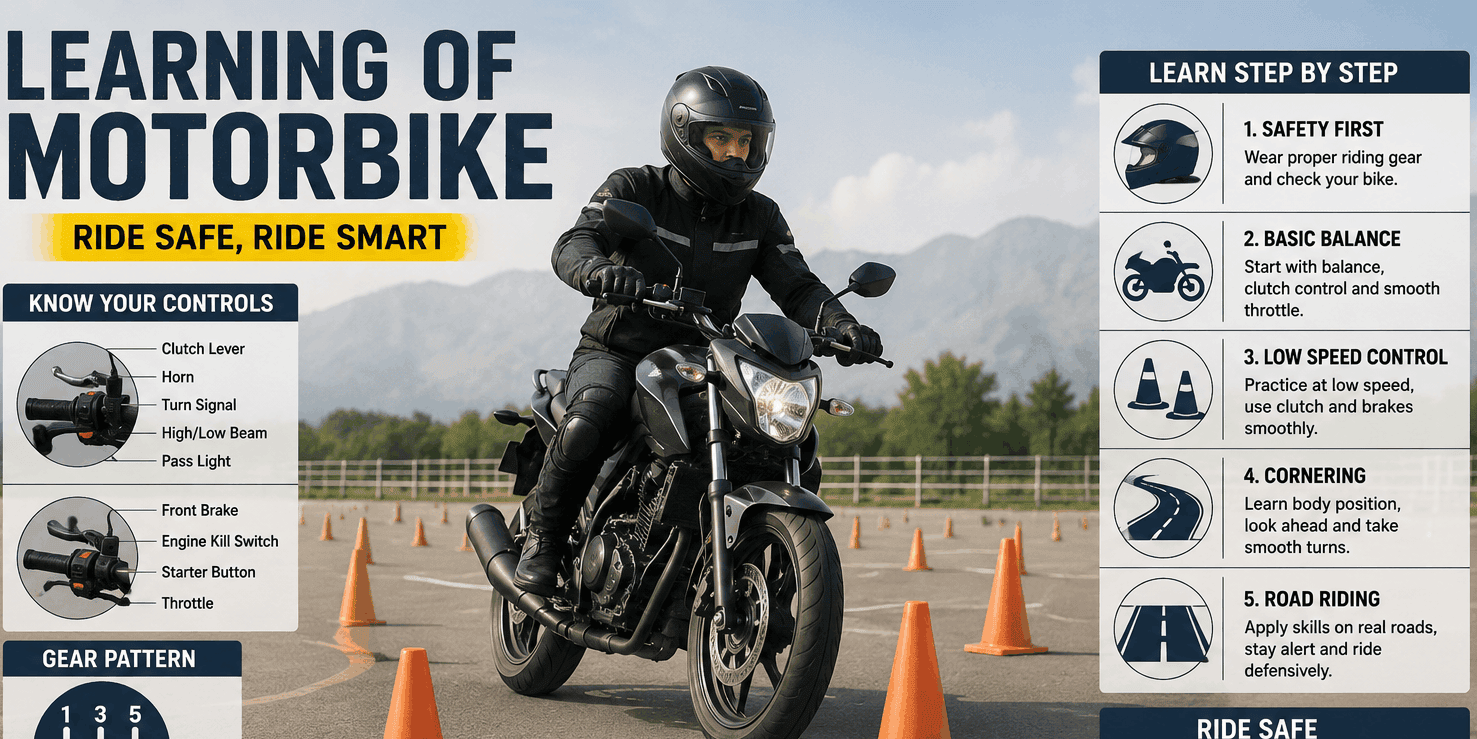
Before starting the engine, every rider should become familiar with the basic controls.
Left Handlebar
- Clutch lever
- Horn
- Headlight switch
- Turn indicators
Right Handlebar
- Front brake
- Engine kill switch
- Starter button
- Throttle
Left Foot
- Gear shifter
Right Foot
- Rear brake pedal
Practice operating each control while the motorcycle is stationary until everything feels natural.
Learn the Friction Zone
Smooth clutch control is one of the most valuable skills a beginner can develop.
Instead of releasing the clutch suddenly, learn to find the friction zone—the point where the motorcycle begins to move forward smoothly.
Mastering this technique helps with:
- Smooth starts
- Hill climbs
- Slow-speed riding
- Heavy traffic
Spend time practicing slow starts before riding on public roads.
Practice Low-Speed Control
Many new riders believe speed is the difficult part.
In reality, slow-speed riding requires greater balance and precision.
Practice:
- Riding in straight lines
- Large circles
- Figure-eight turns
- U-turns
- Slow braking
- Parking
Developing these skills builds confidence for real-world riding.
Understanding Pakistani Traffic
Traffic in Pakistan is dynamic and often unpredictable.
As a rider, always expect:
- Vehicles changing lanes suddenly
- Pedestrians crossing unexpectedly
- Animals on rural roads
- Slow-moving tractors
- Auto-rickshaws stopping without warning
- Buses overtaking aggressively
Rather than reacting late, learn to anticipate what other road users might do.
Defensive riding is the key to staying safe.
Master Braking Techniques
Many beginners rely only on the rear brake.
For effective stopping:
- Apply both front and rear brakes together.
- Squeeze the front brake progressively rather than grabbing it suddenly.
- Practice emergency braking in a safe area.
- Keep the motorcycle upright during hard braking whenever possible.
Proper braking dramatically reduces stopping distance.
Looking Where You Want to Go
Your motorcycle naturally follows your vision.
Instead of staring directly in front of the front wheel:
- Look far ahead.
- Scan the road continuously.
- Watch traffic around you.
- Focus on the exit of every corner.
Good vision improves balance, cornering, and reaction time.
Riding on Highways
Once comfortable with city riding, highways offer a more relaxed environment with smoother traffic flow.
Before entering a highway:
- Check tire pressure.
- Ensure lights are working.
- Wear protective gear.
- Maintain a safe following distance.
- Use mirrors frequently.
- Signal before changing lanes.
Avoid riding in the blind spots of larger vehicles.
Riding in the Mountains
Pakistan's northern regions attract thousands of riders every year, but mountain roads demand patience and concentration.
When riding uphill:
- Maintain steady throttle.
- Select the appropriate gear before steep climbs.
- Avoid unnecessary overtaking.
When riding downhill:
- Use engine braking.
- Avoid continuous braking.
- Control your speed before entering corners.
Never underestimate changing mountain weather or road conditions.
Fuel Planning
Unlike city riding, fuel stations may be far apart in remote areas.
Develop the habit of:
- Refueling whenever your tank reaches half.
- Checking fuel availability before entering remote routes.
- Carrying a small emergency fuel bottle on longer trips.
Good planning prevents unnecessary delays.
Preparing for Different Weather
Pakistan experiences a wide range of climates throughout the year.
Be prepared for:
Summer
- High temperatures
- Heat exhaustion
- Dehydration
Rain
- Reduced grip
- Longer braking distances
- Poor visibility
Cold Weather
- Reduced tire traction
- Numb hands
- Fog
Layered clothing and waterproof riding gear help you stay comfortable throughout the journey.
Carry Essential Riding Equipment
Every rider should have:
- Certified full-face helmet
- Riding gloves
- Protective jacket
- Riding boots
- Rain gear
- Basic tool kit
- Tire pressure gauge
- Mobile phone holder
- First-aid kit
- Power bank
Quality safety equipment is an investment in your protection.
Basic Motorcycle Maintenance Every Beginner Should Know
You don't need to be a mechanic, but understanding simple maintenance helps prevent breakdowns.
Before every ride, check:
- Tire pressure
- Chain lubrication
- Brake function
- Headlights
- Indicators
- Horn
- Engine oil level
- Fuel level
A five-minute inspection can save hours of trouble.
Ride with Confidence, Not Ego
One of the biggest mistakes beginners make is trying to keep up with experienced riders.
Instead:
- Ride at your own pace.
- Take breaks when tired.
- Ignore pressure from faster riders.
- Focus on smooth riding rather than speed.
Confidence develops through experience—not risk-taking.
Join Group Rides the Right Way
Group rides are an excellent way to gain experience.
Follow these simple rules:
- Arrive with a full fuel tank.
- Attend the rider briefing.
- Maintain your position.
- Keep a safe following distance.
- Communicate with hand signals.
- Never overtake the ride leader without permission.
Learning from experienced riders helps improve your skills quickly.
Common Beginner Mistakes
Avoid these common errors:
- Riding too fast into corners
- Looking down instead of ahead
- Sudden braking
- Ignoring mirrors
- Riding without protective gear
- Overloading the motorcycle
- Poor tire maintenance
- Riding while fatigued
- Skipping routine inspections
Recognizing these habits early makes you a safer rider.
Build Experience Before Long Tours
If your goal is to explore northern Pakistan, don't rush into a multi-day expedition immediately.
Start with:
- Local rides
- Day trips
- Weekend tours
- Short camping trips
- Highway practice
Each ride builds confidence and prepares you for longer adventures.
Learn from Professional Riders
The fastest way to improve is to ride with experienced motorcyclists.
At Pakistan Bikers, we organize guided rides where beginners can learn:
- Safe cornering techniques
- Group riding etiquette
- Route planning
- Motorcycle maintenance basics
- Long-distance riding skills
- Mountain riding techniques
Experienced guides provide practical advice throughout the journey, making your first touring experience both educational and enjoyable.
Frequently Asked Questions
Can beginners ride motorcycles in Pakistan?
Yes. Beginners should start with quieter roads, lightweight motorcycles, and short rides before progressing to highways and mountain routes.
Which motorcycle is best for beginners?
Motorcycles such as the Honda CG125, Yamaha YBR125G, Suzuki GS150, and Honda CB150F are excellent choices because they are reliable, economical, and easy to handle.
Is riding in northern Pakistan difficult?
Mountain roads require additional skills due to steep climbs, sharp bends, and changing weather. Beginners should first gain confidence on city and highway routes before attempting high-altitude tours.
What safety gear is essential?
A certified helmet, gloves, riding jacket, sturdy boots, and reflective clothing are highly recommended for every ride.
Can I join a guided motorcycle tour as a beginner?
Yes. Guided tours are a great way to gain experience because professional tour leaders provide route guidance, safety briefings, and practical riding tips throughout the journey.
Start Your Riding Journey with Pakistan Bikers
Every experienced motorcyclist was once a beginner. The key to becoming a confident rider is building strong fundamentals, practicing regularly, and developing safe riding habits.
Whether you're preparing for your first weekend ride or dreaming of exploring Pakistan's breathtaking landscapes, the right training and preparation make every journey more enjoyable.
Pakistan Bikers offers beginner-friendly motorcycle rentals, guided tours, and riding support to help you gain confidence while discovering some of Pakistan's most scenic roads. Ride smart, stay safe, and let every kilometer become part of your adventure.